
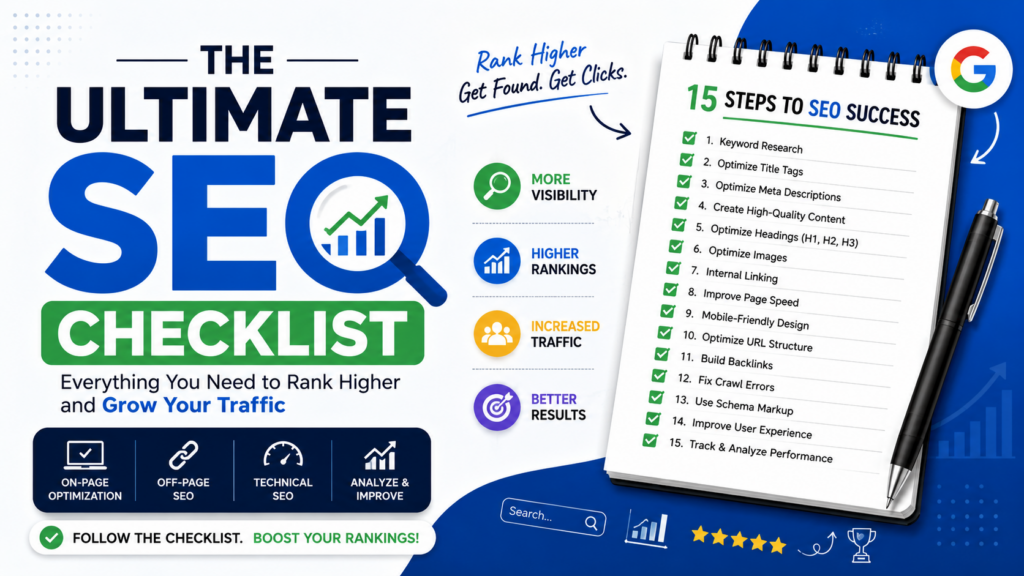
Meta description: A practical, step-by-step SEO checklist covering keyword research, on-page optimization, technical SEO, and link building to help your website rank higher.
Search Engine Optimization (SEO) can feel overwhelming there are dozens of ranking factors, constant algorithm updates, and endless advice online. But at its core, SEO comes down to a handful of fundamentals done consistently well.
This checklist breaks SEO into three manageable categories on-page, technical, and off-page so you can systematically improve your site’s visibility on search engines.
Part 1: On-Page SEO
1. Do Proper Keyword Research
Before writing anything, identify the terms your audience is actually searching for. Look for a mix of high-volume “head” keywords and more specific “long-tail” keywords that signal clearer buying or search intent.
2. Write Compelling Title Tags
Your title tag is one of the strongest ranking signals and the first thing users see in search results. Keep it under 60 characters, include your primary keyword near the front, and make it click-worthy.
3. Craft Unique Meta Descriptions
While meta descriptions don’t directly boost rankings, they heavily influence click-through rate. Write a clear, benefit-driven summary (150–160 characters) for every page.
4. Use Header Tags Strategically
Structure your content with H1, H2, and H3 tags. This helps both readers scan your content and helps search engines understand your page’s hierarchy and topics.
5. Optimize for Search Intent
Google prioritizes content that best matches what a searcher actually wants — informational, navigational, or transactional. Match your content format (guide, product page, comparison, etc.) to the intent behind the keyword.
6. Include Keywords Naturally
Work your target keyword and related terms into your title, first paragraph, headers, and body text — without keyword stuffing. Modern SEO rewards natural, comprehensive writing over robotic repetition.
7. Optimize Images
Compress images for faster load times and add descriptive alt text. This improves accessibility and gives search engines more context about your page’s content.
8. Add Internal Links
Link to other relevant pages on your own site. This helps distribute “link equity,” keeps visitors engaged longer, and helps search engines discover and index more of your content.
Part 2: Technical SEO
9. Improve Page Speed
Slow-loading pages hurt both rankings and user experience. Compress images, enable browser caching, and minimize unnecessary scripts to speed things up.
10. Ensure Mobile-Friendliness
Google uses mobile-first indexing, meaning it primarily evaluates the mobile version of your site. Make sure your design is responsive and easy to navigate on smaller screens.
11. Fix Broken Links and Errors
Regularly audit your site for 404 errors and broken links, which frustrate users and waste “crawl budget” the resources search engines allocate to indexing your site.
12. Create and Submit an XML Sitemap
A sitemap helps search engines find and index all the important pages on your site efficiently. Submit it through Google Search Console.
13. Use HTTPS
A secure, HTTPS-encrypted site is a baseline ranking factor and builds trust with visitors especially important for e-commerce or any site collecting personal information.
Part 3: Off-Page SEO
14. Build Quality Backlinks
Links from reputable, relevant websites act as votes of confidence in the eyes of search engines. Focus on earning links through guest posts, partnerships, and genuinely link-worthy content rather than buying links.
15. Encourage Reviews and Local Citations
For local businesses, reviews on Google Business Profile and consistent business listings (name, address, phone number) across directories significantly impact local search rankings.
Putting It All Together
SEO isn’t a one-time task it’s an ongoing process. A good rhythm looks like this:
- Monthly: Review keyword rankings and organic traffic trends.
- Quarterly: Audit for broken links, page speed issues, and outdated content.
- Ongoing: Publish new, valuable content targeting keywords your audience is searching for.
Final Thoughts
You don’t need to tackle every item on this checklist at once. Start with the fundamentals — keyword research, title tags, and page speed then work your way through the rest over time. Consistent, incremental improvements compound into meaningfully higher rankings and more organic traffic.
Want to see how your site currently stacks up? Run it through Google Search Console and PageSpeed Insights to identify your highest-priority fixes.