
Meta description: Learn how to build an effective social media marketing strategy from choosing the right platforms to creating engaging content and turning followers into customers.
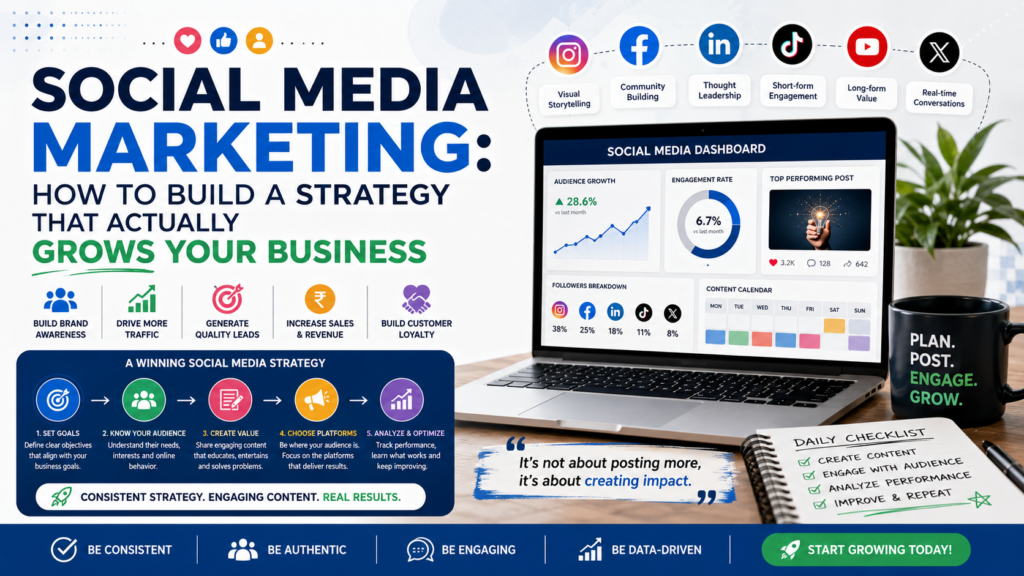
Social media has become one of the most powerful tools for building brand awareness, engaging directly with customers, and driving traffic back to your website. But posting randomly and hoping for the best rarely works. A strong social media strategy is deliberate built around clear goals, the right platforms, and content your audience actually wants to see.
Here’s how to approach social media marketing strategically, rather than treating it as an afterthought.
Why Social Media Marketing Matters
- Brand visibility: Social platforms put your business in front of new audiences beyond people already searching for you.
- Direct engagement: Comments, messages, and shares let you build real relationships with customers in a way traditional marketing can’t.
- Traffic and referrals: Well-placed links in posts, bios, and stories can drive consistent traffic back to your website.
- Social proof: An active, engaged social presence signals credibility to potential customers evaluating your business.
- Customer insights: Comments and engagement patterns reveal what your audience actually cares about, informing your broader marketing strategy.
Step 1: Choose the Right Platforms
You don’t need to be active everywhere you need to be active where your audience actually spends time. Consider:
- Instagram: Strong for visually-driven brands, lifestyle content, and younger audiences.
- LinkedIn: Best for B2B businesses, professional services, and thought leadership content.
- Facebook: Useful for local businesses, community building, and older demographics.
- TikTok: Ideal for short-form, entertaining content and reaching younger, trend-driven audiences.
- Pinterest: Strong for visually inspired purchase decisions, especially in home, fashion, and food niches.
Rather than spreading yourself across every platform, focus your energy on two or three where your audience is most active and where your content style naturally fits.
Step 2: Define Clear Goals
Before creating content, get specific about what you want social media to accomplish:
- Building brand awareness
- Driving traffic to your website
- Generating leads or direct sales
- Building a community around your brand
- Providing customer support
Your goals shape everything from the content you create to how you measure success.
Step 3: Develop a Content Mix
The strongest social media strategies balance different types of content rather than relying on constant self-promotion:
- Educational content: Tips, how-tos, and insights relevant to your audience.
- Behind-the-scenes content: Humanizes your brand and builds trust.
- User-generated content: Reposting customer photos, reviews, or testimonials builds social proof.
- Entertaining content: Trends, humor, or relatable content that encourages shares.
- Promotional content: Product features, offers, and announcements used sparingly relative to other content types.
A common guideline is to keep promotional posts to a small fraction of your overall content, with the majority focused on providing value or entertainment.
Step 4: Post Consistently
Consistency matters more than frequency. A realistic, sustainable posting schedule that you can maintain long-term will outperform a burst of activity followed by long silences. Use a content calendar to plan posts in advance and stay organized.
Step 5: Engage, Don’t Just Broadcast
Social media is inherently two-way. Respond to comments and messages, engage with other accounts in your industry, and participate in relevant conversations. Algorithms on most platforms favor accounts that generate genuine engagement, not just accounts that post frequently.
Step 6: Use Paid Social Strategically
Organic reach on most platforms has become increasingly limited, making paid social a valuable complement to your organic strategy. Even a modest budget can help you:
- Boost high-performing organic posts to reach a wider audience
- Run targeted campaigns to specific demographics or interests
- Retarget website visitors who haven’t yet converted
Step 7: Track What’s Actually Working
Go beyond vanity metrics like follower count. Focus on:
- Engagement rate: Likes, comments, and shares relative to your reach
- Click-through rate: How often people click links to your website
- Conversion rate: How many social visitors take a meaningful action on your site
- Follower growth quality: Are you attracting genuinely relevant followers, not just numbers
Use these insights to refine your content mix and double down on what resonates with your audience.
Common Social Media Mistakes to Avoid
- Being present on a platform just because it’s popular, without a real audience fit.
- Overloading your feed with promotional content.
- Inconsistent posting that makes your brand feel inactive.
- Ignoring comments and messages from potential customers.
- Focusing only on follower count instead of engagement and conversions.
Final Thoughts
Social media marketing works best when it’s treated as a genuine relationship-building channel, not just another advertising billboard. Choose the platforms where your audience truly spends time, create a content mix that provides real value, and stay consistent. Over time, an engaged, well-nurtured social presence becomes one of your strongest assets for both brand growth and driving traffic back to your website.
Quick starting point: pick one platform where your audience is most active, and commit to a realistic posting schedule for the next 30 days before expanding further.