
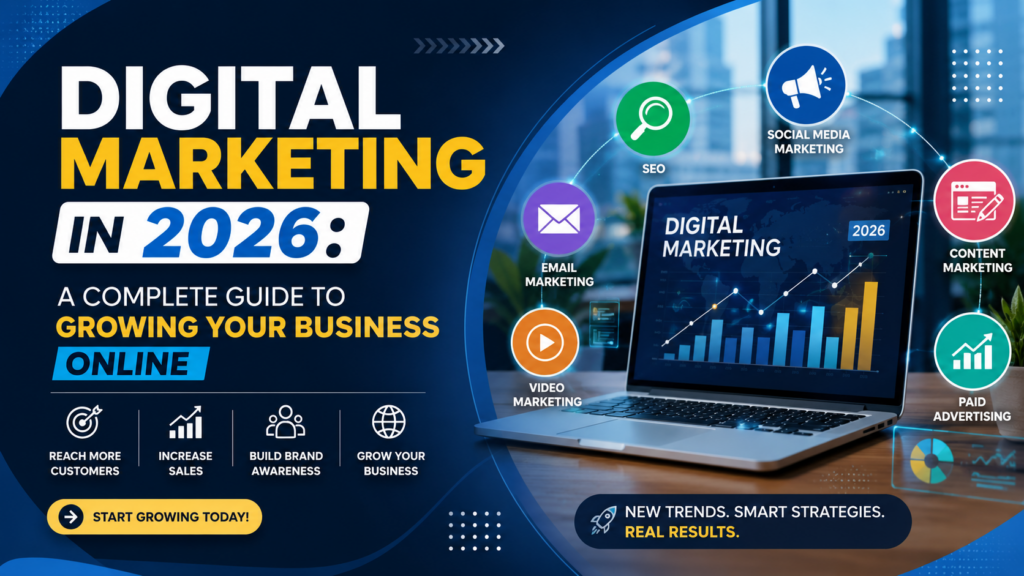
Meta description: Learn what digital marketing is, why it matters, and how to build a winning strategy across SEO, content, social media, email, and paid ads.
Digital marketing has moved from being a “nice to have” to the backbone of how businesses find, engage, and keep customers. Whether you run a small local shop or a growing e-commerce brand, understanding the core pillars of digital marketing can help you compete effectively without needing a massive budget.
This guide breaks down what digital marketing really means, the channels that matter most, and practical steps you can take to build a strategy that drives real results.
What Is Digital Marketing?
Digital marketing refers to any marketing effort that uses the internet or electronic devices to connect with current and prospective customers. Instead of relying solely on traditional channels like print ads, billboards, or TV commercials, digital marketing uses online channels such as search engines, social media, email, and websites to reach audiences where they already spend their time.
The biggest advantage of digital marketing over traditional methods is measurability. You can track exactly how many people saw your ad, clicked your link, or bought your product and adjust your strategy in real time.
Why Digital Marketing Matters for Your Business
- Wider reach: Connect with audiences beyond your local area, even globally.
- Cost-effective: Many digital channels (like SEO and organic social) cost far less than traditional advertising.
- Measurable results: Track clicks, conversions, and ROI with precision.
- Better targeting: Reach the exact audience most likely to buy, based on demographics, interests, and behavior.
- Two-way engagement: Build relationships with customers through comments, reviews, and direct messaging.
The Core Pillars of Digital Marketing
1. Search Engine Optimization (SEO)
SEO is the practice of optimizing your website so it ranks higher in search engine results, driving free, organic traffic. Key elements include:
- On-page SEO: Optimizing titles, headers, meta descriptions, and content around target keywords.
- Technical SEO: Ensuring your site loads fast, is mobile-friendly, and is easy for search engines to crawl.
- Off-page SEO: Building backlinks and authority through other reputable websites linking to yours.
- Content SEO: Publishing valuable, keyword-relevant content that answers your audience’s questions.
SEO is a long-term strategy, but it consistently delivers some of the highest ROI in digital marketing because organic traffic doesn’t stop once you pause spending.
2. Content Marketing
Content marketing involves creating valuable, relevant content — blog posts, videos, infographics, guides to attract and retain a clearly defined audience. Good content builds trust, positions your brand as an authority, and supports your SEO efforts by giving search engines more relevant pages to index.
3. Social Media Marketing
Platforms like Instagram, LinkedIn, Facebook, and TikTok let you build a community around your brand, share updates, and run targeted ad campaigns. The key is choosing platforms where your target audience actually spends time, rather than trying to be everywhere at once.
4. Email Marketing
Despite being one of the oldest digital channels, email marketing remains one of the highest-ROI strategies available. It’s ideal for nurturing leads, promoting new products, and keeping past customers engaged through personalized, automated campaigns.
5. Pay-Per-Click (PPC) Advertising
PPC including Google Ads and paid social campaigns lets you pay for immediate visibility in search results or social feeds. Unlike SEO, results appear quickly, making PPC a strong complement to long-term organic strategies, especially for time-sensitive promotions.
6. Analytics and Data
Every digital marketing effort should be backed by data. Tools like Google Analytics and Search Console help you understand what’s working, where visitors drop off, and how to refine your strategy over time.
Building an Effective Digital Marketing Strategy
- Define clear goals More traffic? More leads? Higher sales? Your goals shape everything else.
- Know your audience Build a customer profile: their needs, pain points, and where they spend time online.
- Choose the right channels Focus on 2–3 channels that align with your goals and audience, rather than spreading yourself thin.
- Create quality content consistently Consistency builds trust and improves SEO performance over time.
- Track and optimize Review your analytics regularly and adjust based on what’s actually converting.
Common Digital Marketing Mistakes to Avoid
- Ignoring mobile optimization, even though most web traffic now comes from mobile devices.
- Focusing only on vanity metrics (likes, followers) instead of conversions and ROI.
- Neglecting SEO basics like page speed, meta tags, and quality backlinks.
- Inconsistent posting or publishing schedules that fail to build audience trust.
- Not testing small A/B tests on headlines, CTAs, and ad creative can significantly improve results.
Final Thoughts
Digital marketing isn’t about doing everything at once it’s about strategically combining the right channels to reach your audience where they are, with content and offers that genuinely resonate. Start with a strong SEO foundation, layer in consistent content and social presence, and use data to continuously refine your approach.
The businesses that win in digital marketing aren’t necessarily the ones with the biggest budgets they’re the ones that stay consistent, listen to their data, and adapt.
Looking to grow your online presence? Start by auditing your current SEO performance and identifying your highest-value content opportunities.
Hi, this is a comment.
To get started with moderating, editing, and deleting comments, please visit the Comments screen in the dashboard.
Commenter avatars come from Gravatar.